JustGardenCentres.com


 MORE ASPARAGUS PAGES
The cheapest way to grow asparagus is by sowing seed and caring for the asparagus plants until they are ready to plant in their final site. However, growing asparagus from seed has a couple of disadvantages compared to growing from asparagus crowns. The first and most obvious disadvantage is that asparagus crowns will produce a crop at least one year quicker compared to asparagus seed.
The second disadvantage with asparagus seed is that the number of varieties available is far less compared to the number of varieties of asparagus crowns. I am not totally sure why this is the case however I suspect that that the profit margin on asparagus seeds is minimal compared to the profit margin on asparagus crowns.
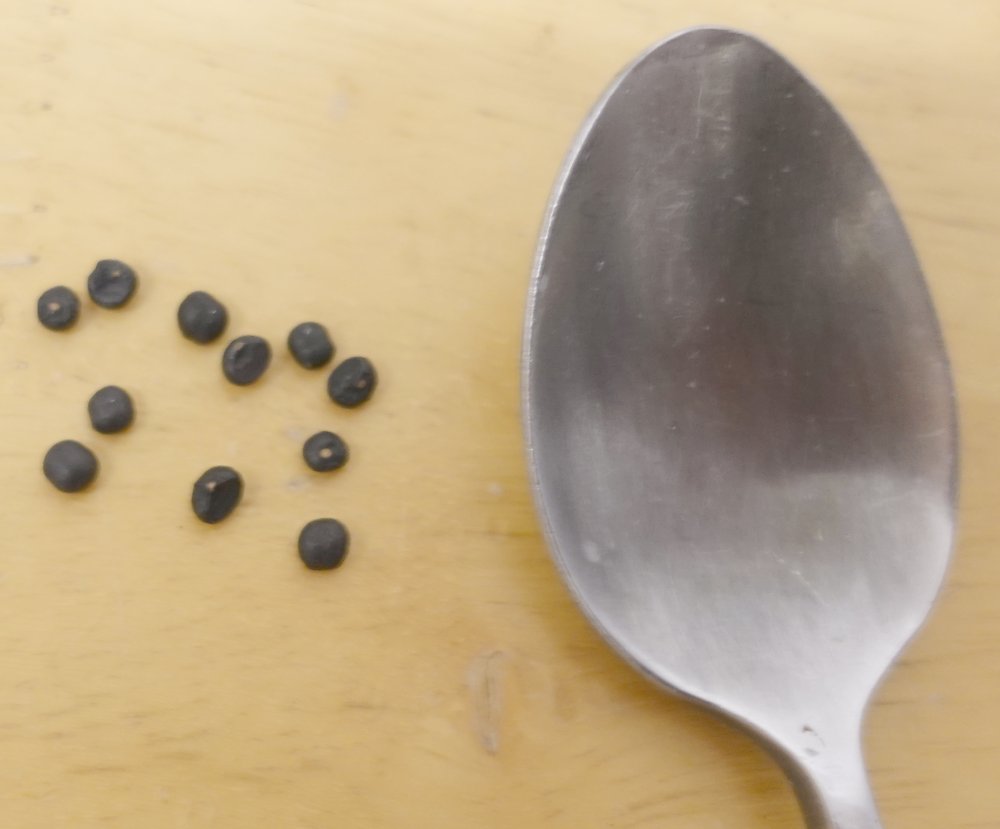
Asparagus seed next to teaspoon
I would also suggest that all-male varieties of asparagus are the only ones worth considering in the UK. However, it is clear to me that the reason for the "all-male" preference amongst most gardeners is not as fact based as most believe. It does seem that all-male varieties work best for commercial growers of asparagus but I think the jury is still out as far as amateur gardeners are concerned.
If you do choose to grow all-male varieties of asparagus it will save a lot of searching if you accept the fact that it will need to be F1 seed. Non-F1 seeds will produce both male and female plants.
The article here may be of interest to those who have the time and space to perform a comparison. Unfortunately I have neither the time nor the space so I stick with the currently accepted wisdom!
On the basis that you will select all-male F1 seed varieties, your choice in the UK (and other areas of the world I think) is very limited as far as seed is concerned.
Ariane is the most commonly available variety of asparagus seed in the UK, most of the large seed companies stock it and some only stock this variety. This is an all-male variety.
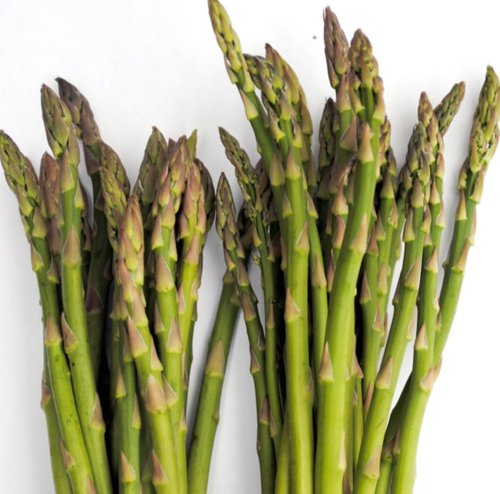
Asparagus Variety Ariane from Seed
A green variety of asparagus which is available from Suttons, Dobies, Kings Seeds and others. Produces tall and slender green spears. Normally sold with 10 seed per pack.
As far as we can judge this variety is only available in the UK from QuickCrop. It produces slender green spears. Commercially, the crowns of this variety are slowly but surely being discontinued.
My investigations lead me to believe that as far as Jersey Knight is concerned, about 80% of the plants will grow as male plants with about 20% growing as female plants.
That's about it for the UK as far as F1 "all-male" asparagus seeds are concerned.
Shown below is a calendar for growing asparagus from seed in the UK
Sow asparagus seed indoors in the third week of February in average UK areas.
Prepare asparagus bed for planting in the first week of March in average UK areas.
Harden off asparagus seedlings in the first week of May in average UK areas.
Plant out asparagus seedlings in the second week of May in average UK areas.
We always recommend sowing asparagus seeds indoors. Sowing asparagus seeds outdoors in their final position is much less reliable with unpredictable temperatures and rain, plus the seedlings can be attacked by slugs and other bugs.
Asparagus plants do not really appreciate being transplanted and inevitably a few of the plants will die when they are transplanted into their final position. So allow for a loss rate of about 20% and sow 20% more seeds than you need. So, if you want 15 plants, sow enough to grow 18 plants.
The best time to sow asparagus seeds is the third week of February in average UK areas. Use 8cm / 3in diameter pots and fill them nearly to the top with good quality peat free compost. It is possible to sow the seeds in smaller module pots and transplant the asparagus later into 8cm / 3in diameter pots but they do just fine in the larger pots.
Place the pots in a container of water and leave them there for 30 minutes or so until the compost is damp.
Make a finger sized hole about 1cm deep in each pot and place three or four seeds in each the hole. Cover the seeds with 1 cm compost and gently firm it down to ensure the seeds are fully in contact with the compost.
Temperature is not particularly critical, we would suggest about 15C / 60F. In about ten days the seedlings will emerge. At this point move the pots to a light (not direct sunlight) position, again at a temperature of about 15C / 60F.
In all likelihood, because three or four seeds were sown per pot, more than one seedling per pot will emerge. When the seedlings are about 3cm / 1in tall remove all but the strongest looking seedling in each pot. Keep the compost moist but not waterlogged.
Modern potting compost contains sufficient nutrients to last the plants for the first six weeks of their life so they will not yet need feeding.
Around the end of April water the plants with a half strength liquid feed of general purpose fertiliser.
The best time to harden off asparagus plants is the first week of May in average UK areas.
The risk of frost will then be minimal and the plants will also be hardening off for at least another week in a protected position.
If you have followed our instructions above for growing asparagus from seed, the ideal time to plant them in their final position is the second week of May in average UK areas.
Dig out one or more trenches (each trench being 45cm / 18in apart), wide and long enough for the number of asparagus crowns you wish to plant. The diagram below shows a suggested planting plan which can easily be expanded in width and /or length. The letters "AC" in the diagram stand for an asparagus plant.
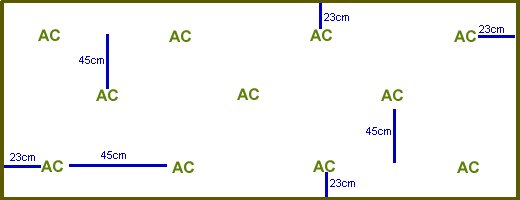

Suggested Asparagus Planting Plan
The key points to note are that each asparagus plant is separated by at least 45cm from the nearest asparagus crown. Just as importantly, each plant is at least 23cm from the edge of the asparagus bed. This allows the asparagus sufficient room for their roots to grow into the surrounding soil.
The asparagus plants should be planted in holes which are wide enough to easily accommodate the roots and should be at the same depth as they were in the pots. Water the plants well.
Finally, if at all possible, mulch the asparagus bed - garden compost, well-rotted manure or wood chips which will help the soil to retain moisture and deter weeds.
Full ongoing care instructions for asparagus can be found by clicking here.
MORE ASPARAGUS PAGES
IF YOU HAVE ANY QUESTIONS OR COMMENTS
CONCERNING THIS PAGE, ENTER THEM BELOW.
WE WILL ANSWER ON
THIS PAGE AS SOON AS POSSIBLE
Copyright 2025 - 2026 JustGardenCentres.com. All rights reserved