JustGardenCentres.com


 MORE ASPARAGUS PAGES
There are very few crops which provide such delicious and long term rewards as asparagus. Possibly the only one which matches it is rhubarb and they have a couple of things in common.
The first is longevity, plant an asparagus patch and it will easily provide you with crops for 20 years with only minimal maintenance.
Another is that asparagus grown in your garden or allotment is so cheap compared to the shop bought alternative. It really is a value for money crop.
The key to growing asparagus is preparation. Spend some time on preparing an asparagus bed, grow them on and you have the jewel of all vegetable crops. Remember that an established asparagus bed will produce for twenty years or more so preparation will pay off.
Early March is a good time for preparing an asparagus bed, ready for planting asparagus crowns and asparagus grown from seed later in the year.
Asparagus grows best in a full sun site. Asparagus will also grow well in part sun so if that is what is available don't be put off although a shady site is not suitable. The type of soil is not crucial but it should be free draining.
An area dedicated to growing asparagus is essential for a good crop - no ifs, no buts. The first reason for this is that asparagus do not cope well with competition, neither from weeds nor from other vegetables.
Asparagus roots are relatively shallow but they absolutely need lots of space to spread out with nothing else growing on top of, or beside them. Understand this and you are 80% of the way to understanding how to grow quality asparagus.
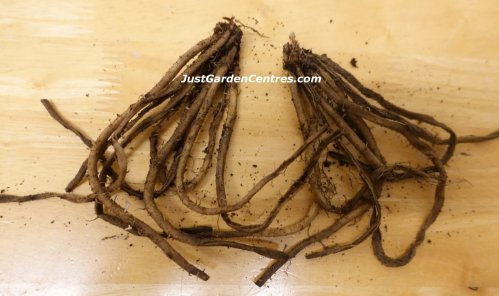

Pair of asparagus crowns
When preparing the bed allow a spacing of about 45cm / 18in in all directions for each plant.
So now you know to choose a dedicated area with as much sun as is possible the next step is to prepare that area. Weeds will be the major concern. The condition of the soil will also be a major contributor to a good crop.
The first step is to remove all weeds from the bed. Be particularly thorough about the weeding, when the asparagus has established the shallow roots will spread quickly and digging out weeds will no longer be an option, only hand weeding will do.
After weeding the bed, dig it to a spade's depth adding as much well-rotted manure and / or garden compost as is available. It will then be very worthwhile applying 5 cm (2in) of mulch evenly spread over the soil surface. The mulch will help retain moisture and it will also deter weeds.
MORE ASPARAGUS PAGES
IF YOU HAVE ANY QUESTIONS OR COMMENTS
CONCERNING THIS PAGE, ENTER THEM BELOW.
WE WILL ANSWER ON
THIS PAGE AS SOON AS POSSIBLE
Copyright 2025 - 2026 JustGardenCentres.com. All rights reserved