JustGardenCentres.com


 OTHER PEA PAGES
Peas are often classified as early varieties, second early varieties and maincrop varieties. Earlies start to produce peas around 12 weeks after sowing, second earlies start to produce peas around 14 weeks after sowing and maincrops start to produce peas around 15 to 16 weeks after sowing.
However, earlies, second earlies and maincrop varieties should all be sown at the same time of year for the earliest crops. Our calendar below shows the earliest date to sow peas for various area in the UK although they can be sown up to two months later.
Peas do not produce their best crops if sown too late in the year, they are a cool weather crop.
We advise setting your frost dates now to your town (it only takes a minute). This will apply to every date in this website. You only need to set the date once, we will remember it in a cookie for future visits.
To set your frost dates, click here, then return to this page and refresh it.
Start sowing peas indoors from
the first week of March in average UK areas.
Start sowing peas outdoors from
the second week of March in average UK areas.
Harvest first and second earlies from
the fourth week of May in average UK areas.
Harvest maincrops from
the fourth week of June in average UK areas.
See the calendar above for an approximate idea of when to sow pea seeds in your area of the UK. Every gardener treasures and early crop peas but bear in mind that pea seeds will rot if they are planted when conditions are too cold, especially if the soil is unusually wet at the same time
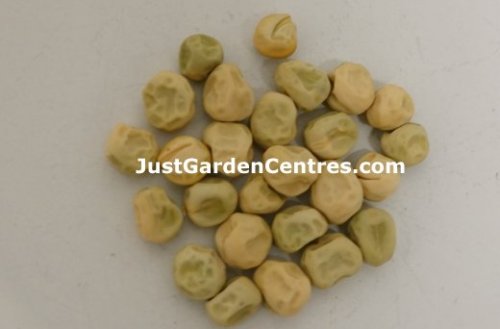

Pea seeds
Peas are unusual because, although they do require a minimum temperature to germinate, once they have germinated they can easily stand lower temperatures in the ground just waiting for the correct temperature to start into full growth.
The UK climate is very variable so we suggest that whilst you use the calendar above as a guide, you should consider germinating your peas inside your house or in a greenhouse. It's very simple and quick to do and reduces considerably the risk of pea seeds rotting in the ground. The calendar above shows the best time to germinate pea seeds inside your house.
To germinate the seeds inside your house place them on damp kitchen towel. Do this in the coldest room in your house and the seeds will begin to sprout in a day or so. See the picture below.
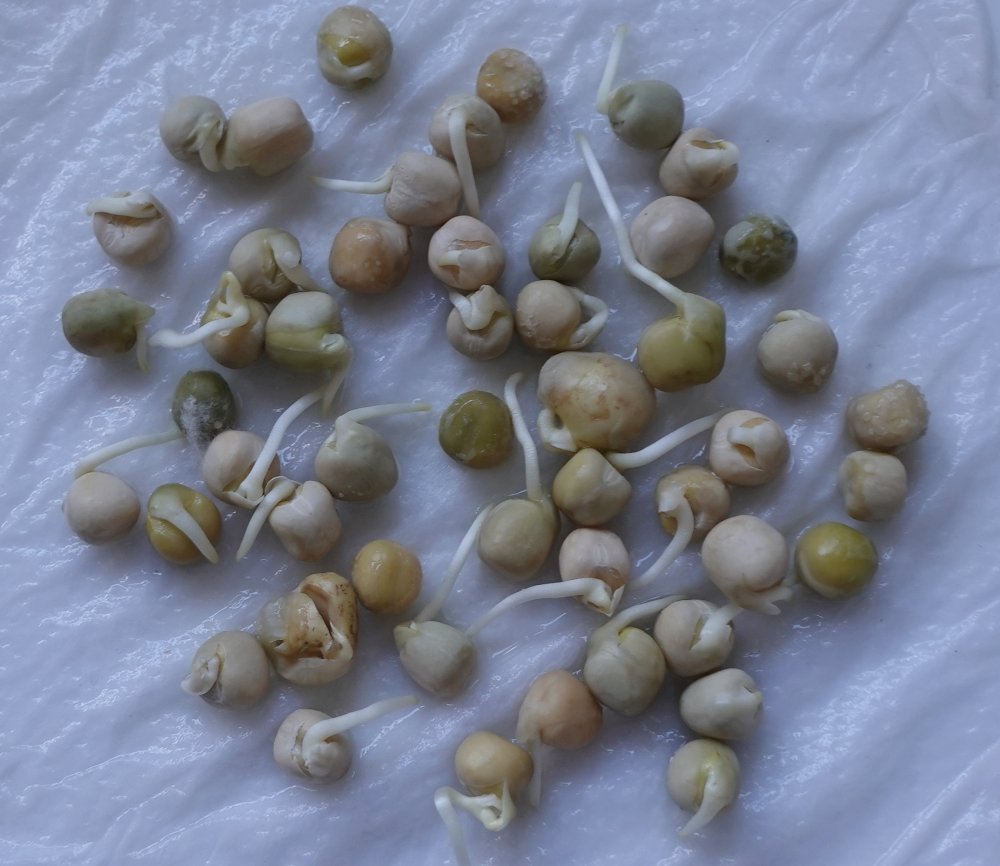
Geminated Pea Seeds
Discard any seeds which have not germinated after a week and sow the remainder as for normal peas as described below. Do this gently to avoid knocking off the sprouts from the the seeds.
Another alternative is to sow the seeds into pots or seedling modules filled with damp multi-purpose compost. Make a hole in the compost about 5cm / 2in deep and drop one or two seeds into each hole then cover them with compost.
As soon as the seeds produce shoots above soil level (it will take about 5 days) move them into indirect light (a north facing windowsill is ideal).
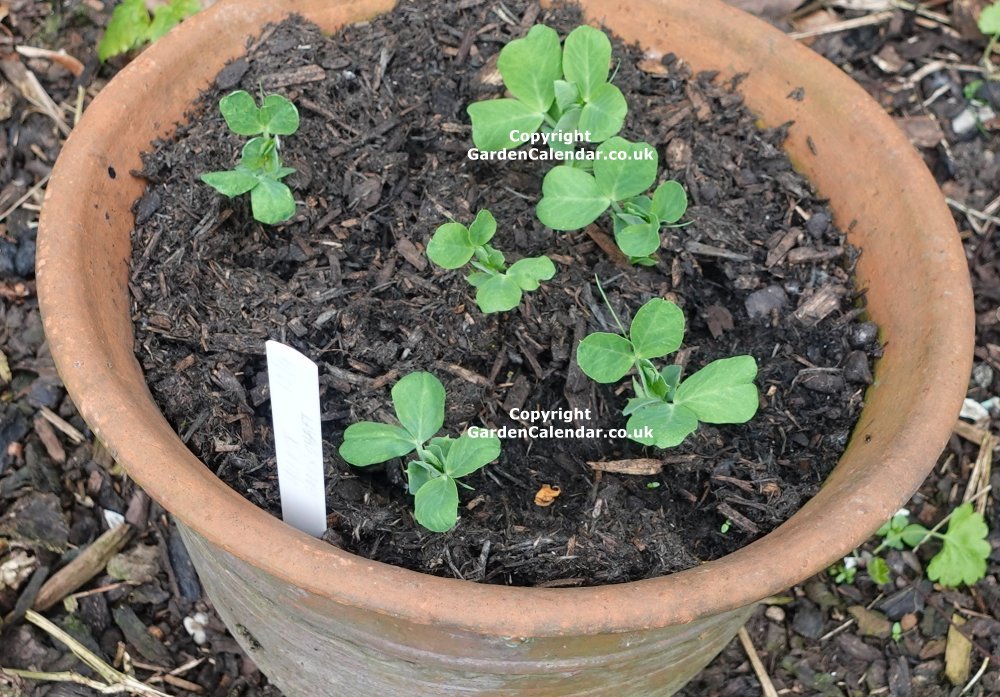
Pea seedlings about 3cm /1in height
Let the seedlings grow to about 12cm / 5in high and then place them outside in a protected position such as against a house wall or in an unheated greenhouse.
At 12cm / 5in high the, seedlings are unlikely to be attacked by pigeons when they are planted outside which can be a major problem for smaller pea seedlings.
With one exception, all pea seeds are sown outside in the same manner. The exception is that climbing peas are sown further apart compared to dwarf varieties.
First though, all peas prefer a moist (but definitely not water-logged) soil. The very best soil for peas will be a loam type of soil which is crumbly, open and at the same time retains moisture.
Peas however, are tolerant of a wide range of soil types, so if your soil is not ideal don't get obsessed with this. Adding organic matter to your garden or allotment soil (both clay and sandy) over several years will gradually improve the soil conditions towards the ideal.
As far as sun goes, sow and grow dwarf peas in a position which has as much exposure to sun as your garden or allotment permits. Climbing peas are slightly more tolerant of shade.
After sowing pea seeds, see our page on how to care for peas.
IF YOU HAVE ANY QUESTIONS OR COMMENTS
CONCERNING THIS PAGE, ENTER THEM BELOW.
WE WILL ANSWER ON
THIS PAGE AS SOON AS POSSIBLE
Copyright 2025 - 2026 JustGardenCentres.com. All rights reserved