JustGardenCentres.com


 OTHER PEA PAGES
There are three main pests and diseases of pea plants. They are Pea Moth, Pea Leaf Weevil and Mildew (Powdery and Downy Mildews), each is discussed below.
This is probably the most devastating of the problems to affect pea plants. The main reason for this is that there is no hint of the damage until you come to shell your peas. Then you see the damaged peas inside the pods.
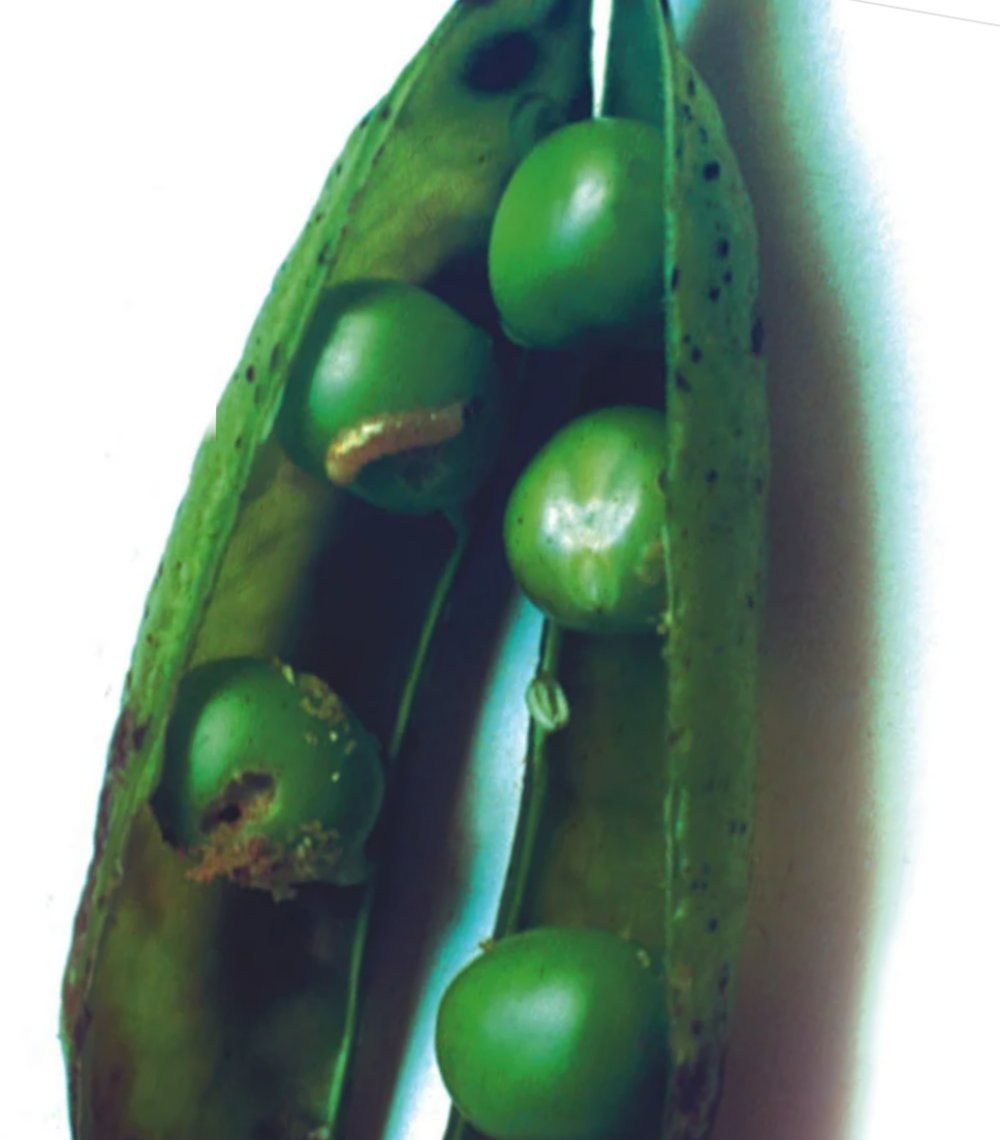
Pea Moth Damage
As you can see from the picture above, the pea moths have burrowed into some of the peas. They also leave their excrement, not nice!
The often advised preventative measure is to cover the pea plants in horticultural. Worth a try but it never seemed to work for me. It seems that some gardens and allotments are attractive to pea moths (tiny light brown insects) and some are not.
My personal experience however is that climbing peas such as Alderman and mange tout peas have always proven to be unaffected by the pea moth so I stick to those nowadays. Other gardeners report the same, although there is no hard evidence to indicate why this is the case. Many other gardeners never have a problem with the pea moth.
Pea Leaf Weevil is more common than pea moth but far less damaging to crop levels. In many cases healthy pea plants will shrug off an attack by pea weevils. Horticultural fleece can be used to cover the plants and in most cases it does reduce the effects of an attack by pea leaf weevils.
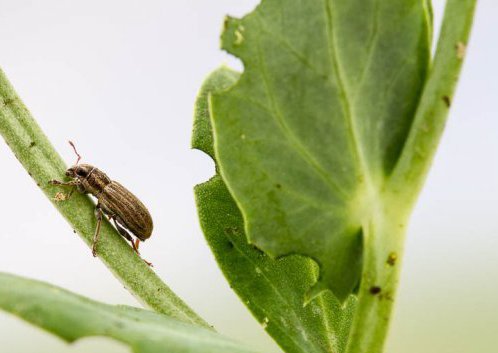
Damage by Pea Leaf Weevils
Powdery Mildew is a fungus which affects lots of plants. With peas it will appear as a light grey powdery coating on the upper and lower surfaces of leaves and stems. See the picture below.
Note that Powdery Mildew is different to Downy Mildew and they are relatively easy to tell apart. Pea varieties which are resistant to Downy Mildew are not normally to Powdery Mildew.
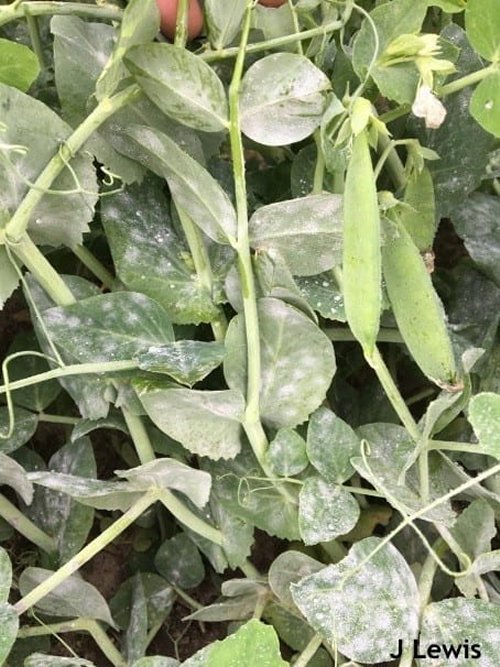
Powdery Mildew of Peas
The fungus favours conditions when day time temperatures are warm and then drop at night - damp conditions are also ideal for the fungus to thrive.
It weakens pea plants leaving them open to other pests and diseases. It also reduces the number of peas produced and can also affect their flavour.
Prevention is the key to avoiding Powdery Mildew. The first measure is to grow your pea plants in a position which receives as much sunshine as possible in the morning. The sun will help to evaporate moisture on leaves and stems early in the day. Avoid growing the plants near a fence or wall. You want as much air circulation as possible.
Pea plants grow most strongly in moist soil and this will allow the plants to more easily overcome any Powdery Mildew. The easiest way to ensure the soil stays moist is to apply a mulch. It will trap moisture in the soil (and deter weeds) whilst at the same time the surface of the mulch will tend to be dry.
When you water your pea plants, don't water the plants themselves, just water the surrounding soil.
Do not apply any nitrogen-rich fertilisers to the soil, it will only encourage weak leaf and stem growth, both of which leave the plants more susceptible to mildews.
Last, but definitely least, there are a few varieties of peas which have proven resistance to Powdery Mildew. The best known of these is the pea variety Eddy, we highly recommend this relatively new variety. Terrain also has good resistance. We highly recommend this relatively new variety.
Once a full blown attack of Powdery Mildew is in progress there are no chemical treatments which help. Commercial fungicides claim to help with Powdery Mildew prevention or mild attacks but they are expensive and the preventative measures outlined above are more effective.
Peas from plants with Powdery Mildew are generally safe to eat but take a few precautions to avoid any allergic reactions.
Firstly, don't eat the leaves and personally I wouldn't eat affected mange tout type peas where the pod is normally eaten, nor would I eat any raw peas from plants affected with Powdery Mildew.
Wash the pods thoroughly with lots of water before opening them. Cook the peas as you would normally do and then taste them, if you have any doubts as to their flavour then don't eat them.
Downy Mildew is a fungal growth which appears of the leaves and stems of many plants, including peas. It is instantly recognisable with orange / light brown growth on the underside of the leaves. As the disease progresses further brown spots appear on the surface of the leaves. See the picture below.
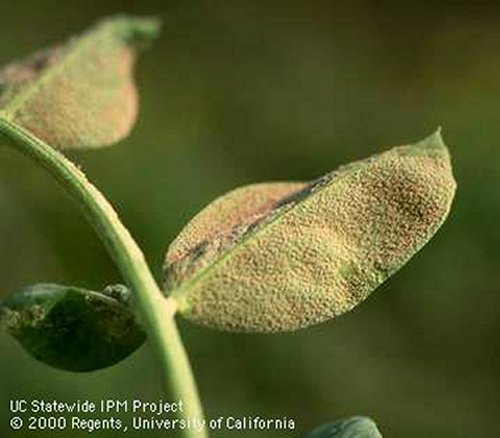
Downy mildew on pea plants
It weakens pea plants leaving them open to other pests and diseases. It also reduces the number of peas produced and can also affect their flavour.
Prevention is the key to avoiding Downy Mildew and all the measures suggested for Powdery Mildew above apply equally for Downy Mildew.
Pea varieties readily available in the UK which are resistant to Downy Mildew include Kelvedon Wonder and Hurst Green Shaft.
IF YOU HAVE ANY QUESTIONS OR COMMENTS
CONCERNING THIS PAGE, ENTER THEM BELOW.
WE WILL ANSWER ON
THIS PAGE AS SOON AS POSSIBLE
Copyright 2025 - 2026 JustGardenCentres.com. All rights reserved